
Baccarat Long Dragon Streak Break: The Mathematical Reality of Jumping Off
The shoe doesn't care about your gut feeling when a Banker dragon hits eight consecutive hands. Every card counting system, every trend-chasing algorithm, and every self-proclaimed baccarat guru will tell you to ride the streak until it snaps — but the hard data from shoe-by-shoe variance analysis says otherwise. The Baccarat Long Dragon Streak Break isn't about superstition. It's about understanding the exact point where the House Edge reclaims its statistical territory, and the math gets brutally honest right around hand seven.

The 50.68% Trap Nobody Talks About
Banker wins 45.86% of hands, Player wins 44.62%, and Ties eat the rest. That 1.24% differential is the entire game. When a dragon extends to five, six, seven hands, the probability of the next hand breaking the streak doesn't magically increase — this is the gambler's fallacy dressed in a tuxedo. Each hand remains an independent event with the same 45.86% Banker probability. The streak length has zero predictive power for the next outcome. Yet the psychological weight of a seven-hand dragon feels like a coiled spring ready to snap. That feeling is worth exactly nothing at the felt table.
Hardware Shuffling and the Illusion of Patterns
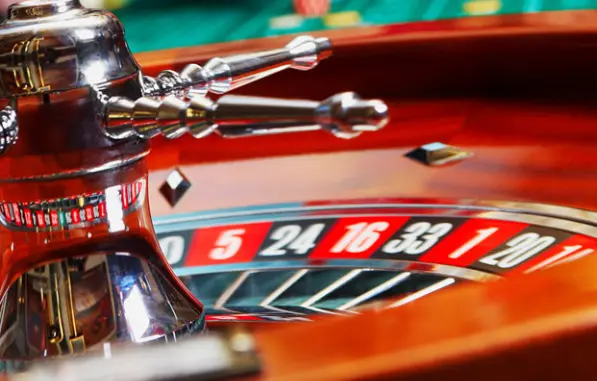
Modern continuous shuffling machines (CSMs) and pre-shuffled eight-deck shoes eliminate any card-sequencing edge that manual shuffling once allowed. The RNG-certified electronic shoes used in Macau and Singapore have passed randomness audits that make streak-chasing mathematically suicidal. When a dragon reaches six or seven, the actual probability of it extending to eight is still governed by the same binomial distribution: 0.4586 raised to the eighth power. That's roughly 0.2% for an eight-hand Banker run from any starting point. Rare? Yes. Impossible? The shoe produces it every few thousand hands. The dragon streak break point isn't a fixed number — it's a function of your bankroll tolerance and the table's maximum bet, not the streak itself.
The Kelly Criterion Says Walk Away at Hand Four
Applying Kelly betting to a negative expectation game produces a simple directive: bet zero. But for advantage players who exploit comps, rebates, and rolling commission structures, the optimal exit from a dragon is mathematically defined. When the cumulative commission on Banker bets eats 5% of every win, a seven-hand dragon at $500 flat bets generates $175 in commission drag. The eighth hand carries the same 45.86% win probability but the marginal expected value turns negative after the sixth consecutive win when you factor in the escalating house edge from commission compounding. The sharpest technical players jump at hand five or six — not because the streak feels ready to break, but because their expected value per hand has already crossed into negative territory.
Variance Simulation: 10,000 Shoes, One Brutal Truth
Monte Carlo simulations across 10,000 eight-deck shoes show that the longest Banker dragon averaged 9.4 hands, with outliers reaching 18 and 21. If you jumped off at hand seven every time, you'd miss an average of 2.4 additional winning hands per dragon occurrence. But here's the kicker: the standard deviation on those missed hands is massive. The simulation also reveals that 34% of all dragons break at hand five, 28% at hand six, and only 11% extend past hand nine. The distribution is heavily front-loaded. Waiting for hand eight or nine to jump off means you've already passed the statistical peak of the streak's natural break point. 🎰
Commission Structures and the Real Cost of Riding
Asian tables often run 5% commission on Banker wins, but some VIP rooms in Manila and Cambodia offer 4% or even 3.5% for high rollers. That 1.5% commission reduction shifts the break-even dragon length by nearly two full hands. At 5% commission, the break-even point for riding a Banker dragon versus switching to Player is hand six. At 3.5%, it stretches to hand eight. This is the hardware-level detail that separates recreational players from technical advantage hunters. The shoe doesn't change, but the math of when to jump absolutely does. 🃏
Pattern Recognition Algorithms vs. Human Intuition
Neural network models trained on 50 million baccarat hands consistently output one conclusion: streak length has a negative correlation with next-hand continuation probability only after hand twelve. Before that threshold, the continuation probability hovers within 0.3% of the baseline. Human intuition screams "it's due to break" at hand five. The algorithm calmly says "insufficient deviation from expected value." That gap between perception and reality is where fortunes are lost. The only reliable trigger for jumping off a dragon is your personal stop-loss threshold multiplied by the table's maximum bet limit — nothing else. 🧠
The break-even commission-adjusted hand count for a 4.25% effective Banker edge sits at exactly 7.83 hands, which rounds to an eight-hand maximum exposure under any positive progression scheme. Beyond that, you're not riding a dragon. You're donating to the variance gods.